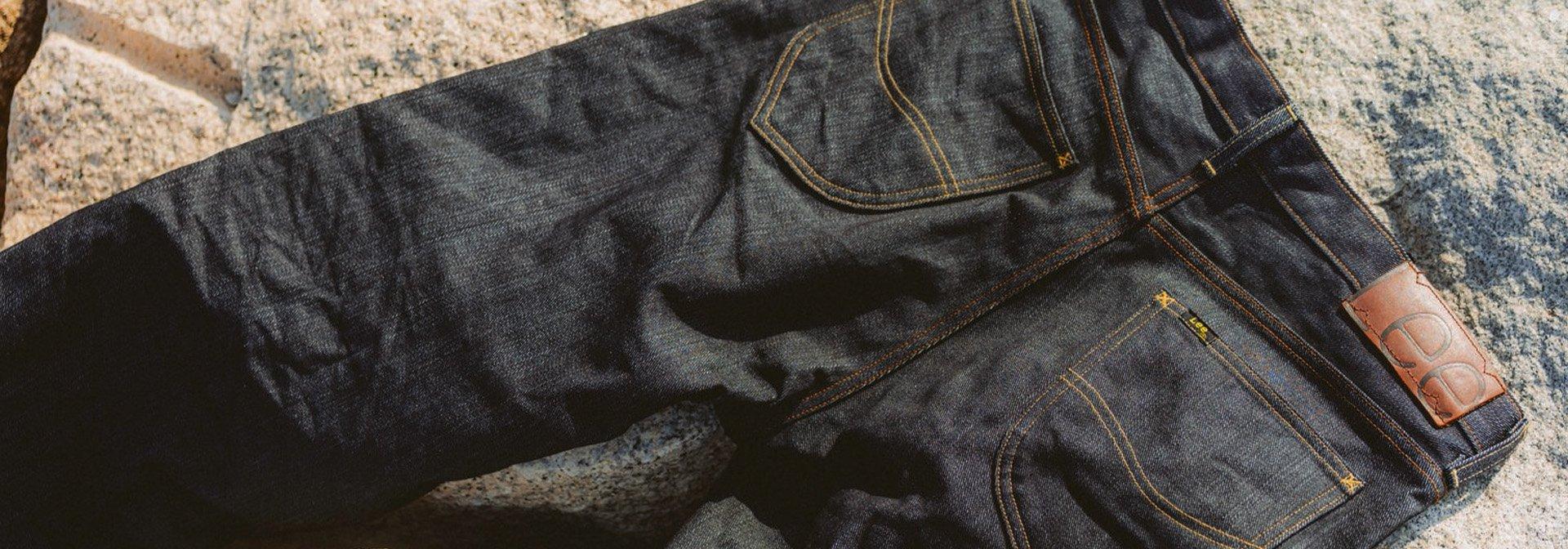
Selvedge denim is denim woven with a clean, self-finished edge that helps prevent the fabric from fraying. Traditionally made on shuttle looms, it is valued for its durable construction, structured feel and distinctive edge detail, often visible when jeans are cuffed. Many denim fans choose selvedge jeans for their premium look, long-lasting quality and the unique way they fade over time.
What does “selvedge” mean in denim?
The term “selvedge” comes from “self-edge”, referring to the finished edge of the denim fabric that helps prevent fraying. This clean edge is often finished with a contrast stitch, commonly in red or gold, and is one of the most recognisable details of selvedge jeans.
Selvedge denim vs regular denim: what’s the difference?
Selvedge denim is often seen as a more premium alternative to regular denim because of the way it is woven and finished. It is typically produced more slowly, often using traditional shuttle looms, which creates a denser fabric and a clean self-finished edge.
The main differences are:
- Construction: selvedge denim has a clean, finished edge that helps prevent fraying.
- Production: it is usually made more slowly than regular denim, using a more traditional weaving process.
- Feel: selvedge jeans can feel stiffer at first, but they soften and mould to your body over time.
- Fading: selvedge denim is valued for the unique fades and character it develops with wear.
- Price: selvedge jeans are often more expensive because of the slower production process and premium finish.
In short, selvedge jeans are ideal if you prioritise durability, structure and unique fading over time, while regular denim may be better if you want a softer feel from the first wear or a lower price point.
Are selvedge jeans comfortable to wear?
Yes, although selvedge jeans can feel stiff at first. Because of the denser weave, they often need a short break-in period before they soften and mould to your body. With regular wear, they become more comfortable and develop a more personalised fit.
How to wash selvedge jeans
- Wash frequency: avoid washing your jeans too frequently. Every 1–2 months is acceptable for regular wear, while some denim enthusiasts prefer to wait 3–6 months to preserve the fabric, colour and fades.
- Hand wash vs machine wash: hand washing is recommended if you want to reduce colour loss, but machine washing on a gentle cycle is also suitable. Always turn your jeans inside out and use cold water with a mild, colour-safe detergent.
- Soaking: if hand washing, soak the jeans for 30–60 minutes without scrubbing or wringing them. Drain the water, then rinse under cold water until the water runs clear.
- Drying: use a spin and drain cycle to remove excess water, then hang the jeans and allow them to air dry completely before wearing again.
How to style selvedge denim
Everyday style
For a stylish everyday look, pair indigo selvedge jeans with a simple white t-shirt and layer with a denim jacket in a similar wash. Add a baseball cap and your favourite trainers for an easy, casual finish.
Dressed up looks
For a more refined look, style selvedge jeans with a button-down shirt and a blazer. Complete the outfit with a leather belt and Oxford shoes for a smarter take on denim.
Whether you prefer a casual everyday outfit or a more refined denim look, selvedge jeans are a timeless choice that only get better with wear. Explore Lee selvedge denim to find premium jeans with heritage construction, lasting character and authentic denim appeal.

